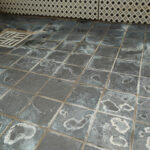
Bluestone has plenty of natural character, but grout haze can do a surprisingly good job of hiding it.
A film of grout residue left behind after installation can dull bluestone and other natural stone; masking the colour, texture and features you chose the stone for in the first place.
Traditionally, stubborn grout and cement residue has often been tackled with hydrochloric or muriatic acid. But that’s not the only option anymore. Grout haze can also be removed using a biodegradable acid replacement cleaner, without using traditional hydrochloric acid.
Watch as the grout haze is removed and the natural character of the bluestone is brought back to life.
What Is Grout Haze?
Grout haze is the residue that can remain on tiles, pavers or natural stone after grouting.
During installation, grout is worked into the joints and the excess is wiped from the surrounding surface. If some residue remains, it can dry into a cloudy film across the stone. The result can be particularly frustrating when you’ve just installed new paving or tiles and the finished surface looks dull rather than clean.
It’s not simply about dirt. On natural stone, grout haze can mask variations in colour, texture and veining that are part of the character of the material.
Where Can Grout Haze Be a Problem?
Grout haze can occur across many newly grouted natural-stone and tile surfaces – from patios and outdoor entertaining areas to paths, entrances, steps and tiled areas.
How noticeable it is will depend on the type of stone, its colour and texture, and how much residue remains after installation.
The bluestone shown in this video is a good example. Also known as basalt, it can have distinctive natural variations and veining. A film of grout haze across the surface can hide those features and leave the stone looking flatter and duller than it really is. For more information, see our guide on how to clean bluestone.
Removing Grout Haze Without Traditional Hydrochloric Acid
Once grout haze has dried, simply hosing the surface may not be enough. You need to break down the residue while considering the natural stone underneath.
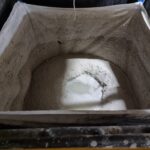
Here, SlurrySafe AR is used as an acid replacement cleaner. When applied to the grout haze, the cleaner begins reacting with the residue almost immediately.
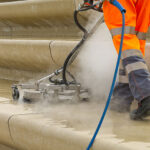
The surface is then worked with an ordinary soft broom or brush to help loosen the remaining haze before being thoroughly rinsed with clean water. There’s no aggressive scrubbing or specialised cleaning equipment required for this particular job.
There’s another noticeable difference compared with traditional acid cleaning. SlurrySafe AR won’t burn the skin and the prepared solution is handled directly during the demonstration. It provides a useful contrast to the handling concerns associated with traditional hydrochloric or muriatic acid. Learn more about the risks associated with traditional acids and why an acid replacement may be a safer alternative.
The bluestone or other natural stone doesn’t need to be pre-wet before the cleaner is applied. Always follow the current product and application instructions for the particular surface you’re cleaning.
When New Stone Doesn’t Look New
One of the frustrating things about grout haze is that it can make brand-new stone look old, dull or dirty.
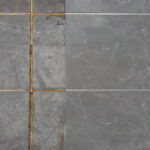
With the grout haze removed, the natural colour and veining in the basalt become much clearer. What initially looked like dull bluestone was actually good stone hidden beneath a layer of grout residue.
The same principle applies when cleaning grout haze from other suitable natural stone surfaces. The objective isn’t to change the appearance of the stone, rather it is to remove the residue that’s preventing you from seeing it properly.
That’s ultimately what good grout haze removal should achieve, to remove what’s sitting on the stone without taking away from the stone itself.
For more information about the SlurrySafe AR acid replacement cleaner, including its applications and usage instructions, visit the product page.