Efflorescence is the white, chalky or crystalline build-up that can appear across masonry and tiled surfaces. It can make an otherwise perfectly good surface look stained, weathered or neglected.
Efflorescence can appear in all sorts of places – on brick walls, concrete and pavers, or around the grout lines of tiled areas such as outdoor stairs and entrances.
It can affect homes and commercial buildings alike, particularly where moisture is moving through masonry or behind a tiled surface.
While efflorescence can look stubborn, efflorescence removal can restore the appearance of affected masonry, paving and tiled surfaces. Understanding what causes them can also help you deal with the problem more effectively.
What Causes Efflorescence?
Efflorescence occurs when moisture moves through materials containing soluble salts. As the moisture reaches the surface and evaporates, the water disappears but the salts remain, leaving the familiar white deposits behind.
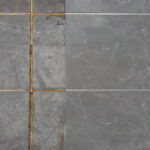
With tiled surfaces, the deposits aren’t necessarily coming from the tiles themselves. Moisture can get behind the tiled area and make its way out through grout joints, bringing dissolved salts with it.
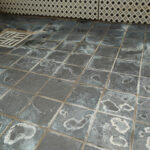
The porcelain-tiled staircase below is a good example. Moisture moving from behind the tiles and through the grout had resulted in a significant build-up of efflorescence across the stairs.
Watch how the efflorescence is removed and see the finished result.
How Do You Remove Efflorescence?
The cleaning approach will depend on the surface and how heavily the efflorescence has built up.
For this particular clean, SlurrySafe AR is used to break down the heavy efflorescence that has built up across the porcelain stairs. As the cleaner contacts the efflorescence, it begins to foam as it reacts with the mineral deposits. Clean areas of porcelain don’t produce the same reaction, confirming where efflorescence is present.
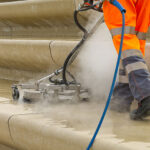
The affected surface is then worked with a stiff scrubbing brush to help break up the deposits before being thoroughly rinsed with clean water. In this case, a normal garden hose is sufficient for rinsing.
Once complete, the white salt deposits disappear and the original appearance of the porcelain tiles is revealed once again.
What If the Efflorescence Keeps Coming Back?
Removing the white deposits deals with what you can see, but it doesn’t necessarily address why the efflorescence formed to begin with.
If it keeps returning to the same wall, grout line, paved area or tiled surface, moisture may still be moving through or behind the material and carrying more salts to the surface.
In that situation, it’s worth investigating where the moisture is coming from rather than simply cleaning the deposits each time. Dealing with both can help keep the area looking clean for longer.
For more information about the acid replacement cleaner used in this clean, or to explore the full range of products available from Slurry Solutions, visit our Product Range or give us a call on 1300 622 175.